12.11 | p4 final

For Today: P4 Final Presentations (9–9:50)
Please make sure all final work is uploaded to Vimeo and D2L.

  • This week is finals. Your final project is due today at 9AM.
  • Cass will hold office hours for anyone who would like to meet with her to discuss your final project or anything concerning the course this term. If you would like to meet, please schedule office hours here
P4 Final Submission Guidelines – For Review
  • Project 4 Final: Final motion design uploaded to Vimeo. Upload your final files in a ZIPPED folder named “lastname_p4_MotionPoster” to the assignments folder on D2L “Project 4”.
    • In zipped folder, FINAL .aep file
    • In zipped folder, FINAL movie rendering @1080p or 720p (do not need process renderings)
    • .gif file (created in Photoshop – refer to last week’s demo)
    • In zipped folder, Design Boards (P4 file for download) – only 4 frames (the zipped file is revised for the different format and duration) PDF only please!
  • All process work (PDFs, JPEGs, PNGs) needs to be on Medium post (not in zipped folder)
    • keyword/idea list/mood boards
    • brainstorming/sketches
    • 2 roughs
    • 1 static posters

Course Survey

Have a wonderful holiday break!

12.4 | on-ground | p4 final critique

Due Today: P4 Motion Poster

For Today:

Focus for Critique:

CONCEPT + MOOD:
What is the overarching idea (thinking, logic, thread) for your design? How does the poster feel?

MESSAGE:
Is the topic clear? Does the content hook us? Does the poster's content unfold in a purposeful way? 

TIMING:
Look at speed and feel for "sticky spots." Does everything flow? Do any areas feel too slow/fast? 

TRANSITIONS:
Does any content enter/exit at the wrong time? Are there any transitions that seem out of place or lacking?

FORMAL CHOICES: Then…how are your design choices communicating the above? Type, color, imagery, etc. Is the event content read clearly, quickly, and easily? Is there unity throughout? Color coding? How did the designer use repetition with variation through the sequence?
Due Next Class:
  • Final P4 Submission (submission guidelines posted on 12.3)

____________F I N A L S_________________

  • 12.11 – (9AM) P4 Deadline; Final Presentations
    Final P4 Submission (review guidelines above)

Final Exam Schedule

12.2 | p4 static crit

For Today:

  • 2 static poster designs (digital rendering w/ one concept using an analog technique) / storyboard (3 frames) / 2s motion test
  • p4 static poster critique
  • Optional Video Demo: Animated GIFs / optional: from AE to PS (watch below)
  • Demo File .mp4

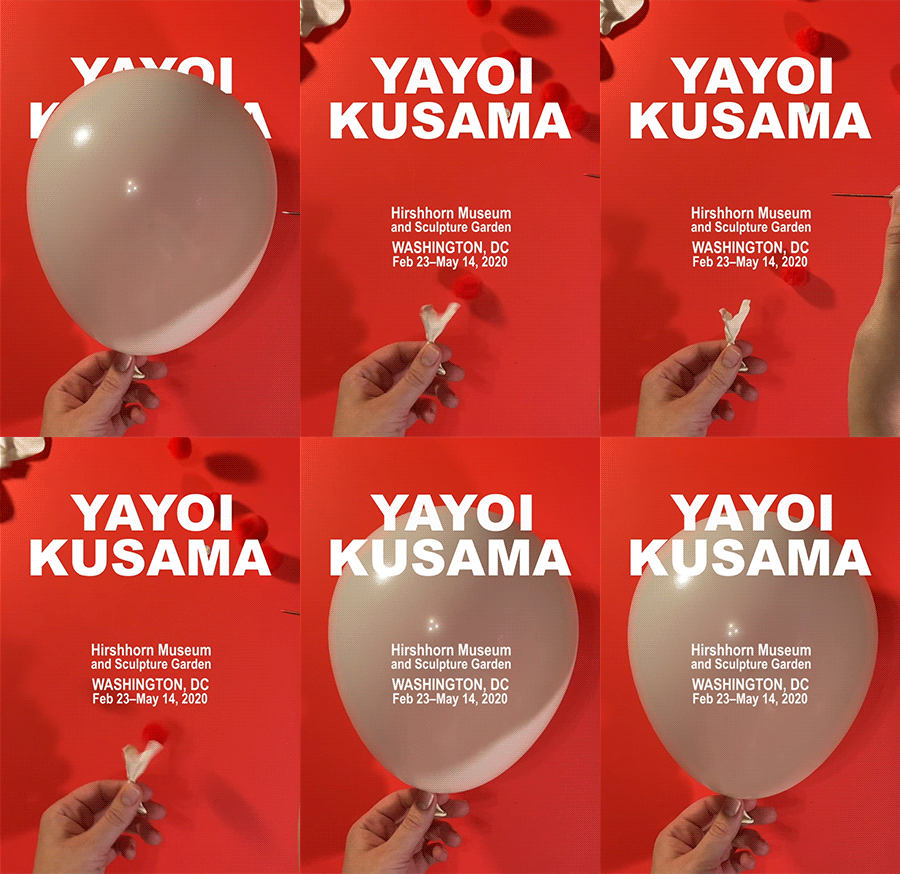
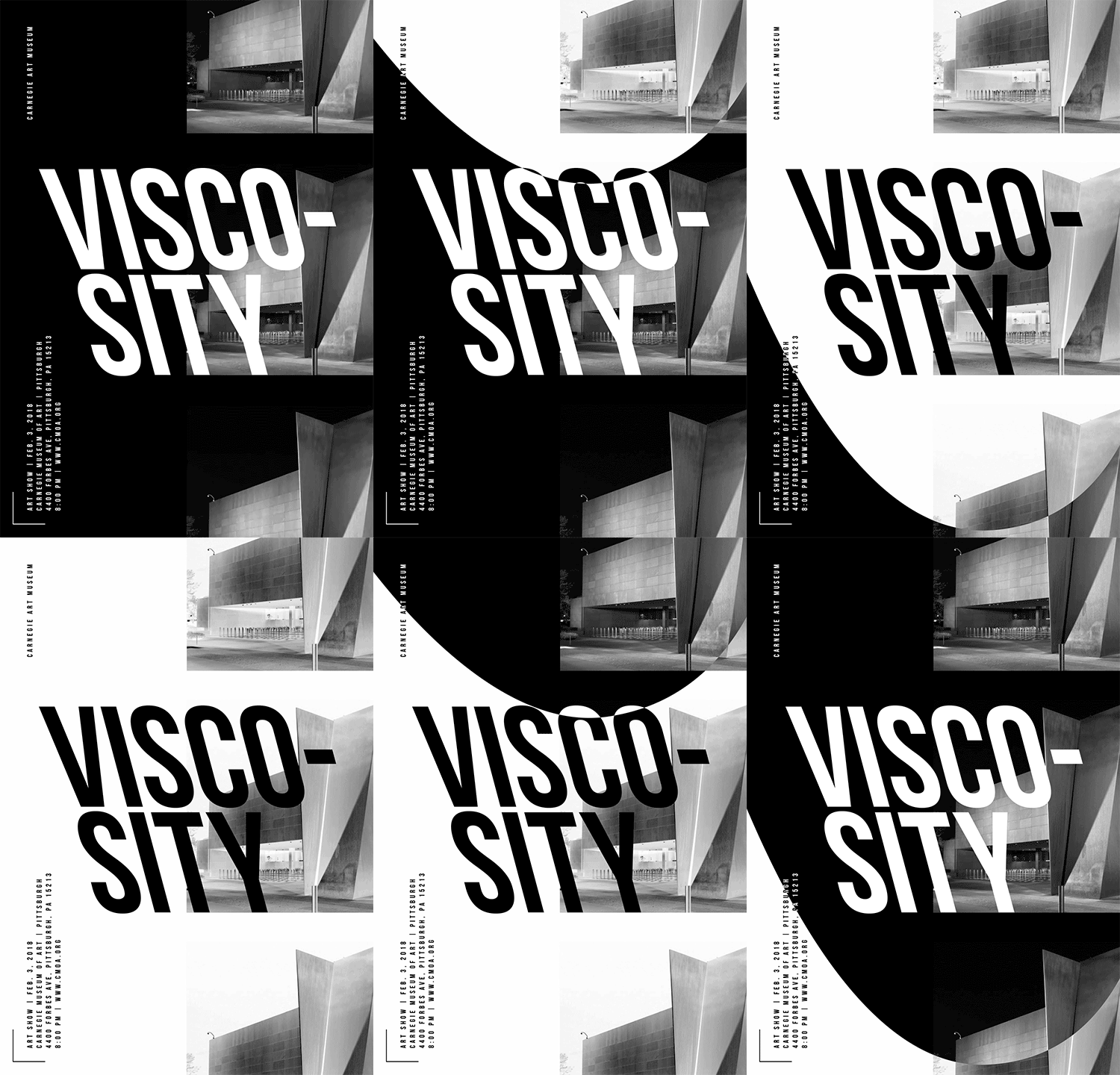
P4: Motion Poster
due Thursday 12.11 @9AM

P4 Motion Poster Critique

Please provide feedback on 6 peers on the following points. Post work here: P4_Mosters_F25.

Focus for Critique: 

CONCEPT/MOOD: What is the overarching idea (thinking, logic, thread) for your design? How does the poster feel? 

CONTENT/MESSAGE: Is the topic clear? Does the content hook us? Does the poster's content unfold in a purposeful way? 

TIMING: Look at speed and feel for "sticky spots." Does everything flow? Do any areas feel too slow/fast? 

TRANSITIONS: Does any content enter/exit at the wrong time? Are there any transitions that seem out of place or lacking? Looping considerations. 

FORMAL CHOICES: Then…how are your design choices communicating the above? Type, color, imagery, etc. Is the event content read clearly, quickly, and easily? Is there unity throughout? Color coding? How did the designer use repetition with variation through the sequence?

P4 Final Submission Guidelines

  • Project 4 Final: Final motion design uploaded to Vimeo. Upload your final files in a ZIPPED folder named “lastname_p4_MotionPoster” to the assignments folder on D2L “Project 4”.
    1. FINAL .aep file
    2. FINAL movie rendering @1080p or 720p (do not need process renderings)
    1. .gif file
    2. Design Board (P4 file for download) PDF – only 4 frames (the zipped file is revised for the different format and duration) Create Design Boards (P4 file for download)

  • All process work (PDFs, JPEGs, PNGs) needs to be on Medium post (not in zipped folder)
    • keyword/idea list/mood boards
    • brainstorming/sketches
    • 1–2 roughs
    • 1 static poster
    • motion test

Final Presentations: For our final project, you will be presenting your concept for your final work. For your rationale, describe concept (narrative, mood, contrast, and formal) and formal choices. Remember to include both the name of your typeface(s) and WHY they were selected to support your concept. All of your choices should support how you want your work to feel.

Project 4 Rubric

*Keep in mind that project 4 is now worth 50 points (weighted grade in D2L), although the rubric is still based on the value of 100. Keep in mind, that the points will cut in half for everything below. For example: The animated GIF will be worth 2.5pts, as opposed to 5pts.

p4_mosters_rubric2

How to Render your GIF

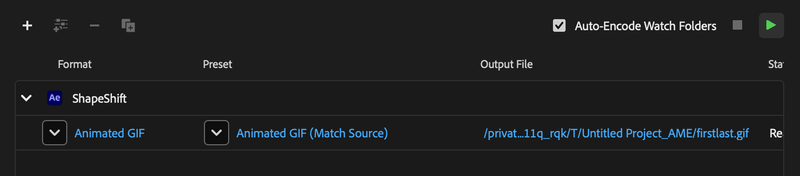
1. Go to Composition > Add to Adobe Media Encoder Queue.
2. In Media Encoder, set Format to Animated GIF.
3. Click the Output File name to choose where to save it (select your desktop).
4. Click the green play button to render.
5. Test your GIF—congrats, you’ve made your gif! (hit spacebar to play)
6. 
AME (Adobe Media Encoder) makes it easier than ever, but If you’d aslo like to know how to create a GIF in Photoshop, watch the video below.

GIF Tips

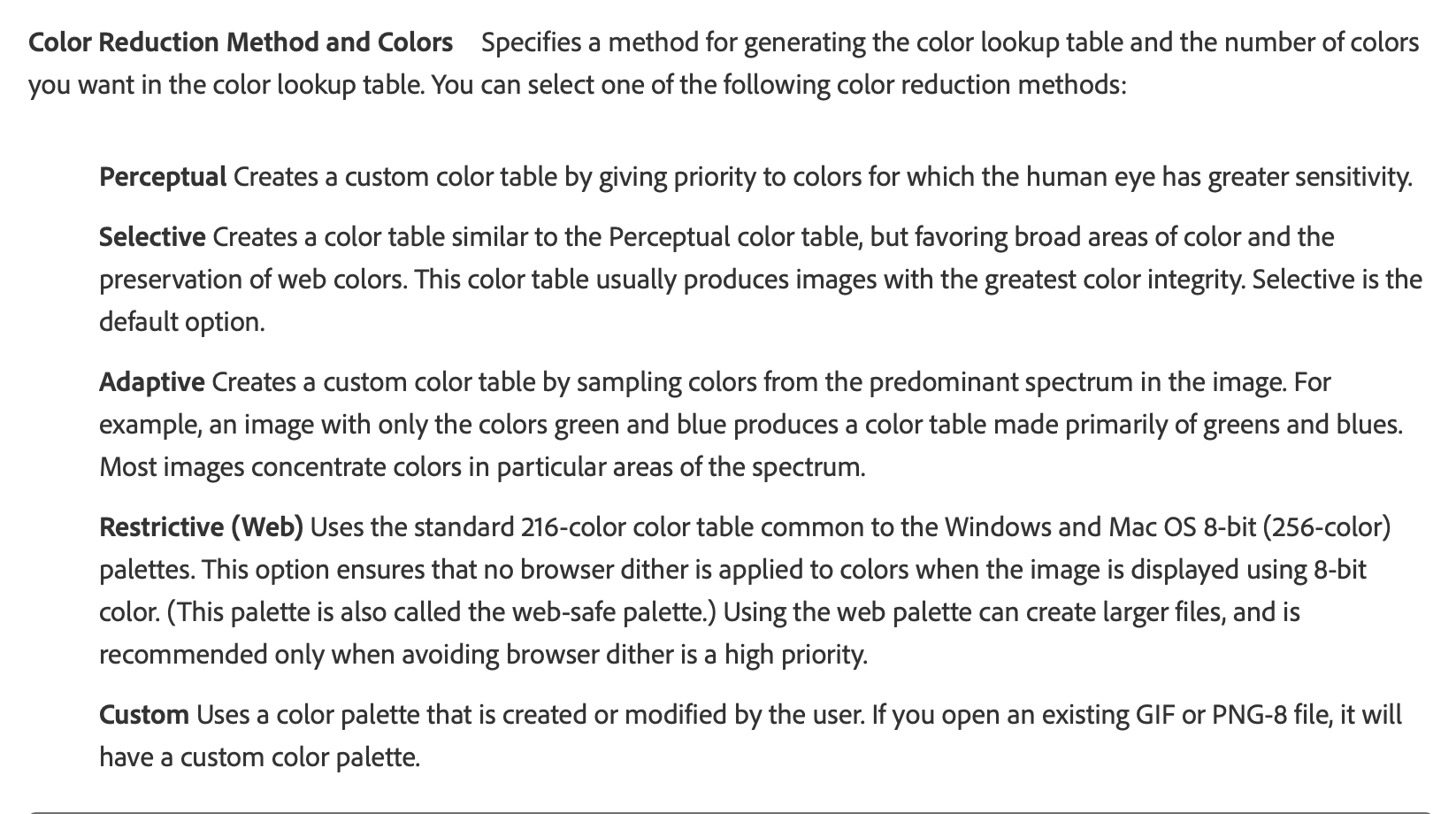
  • Color Palette Limitation: GIFs support a maximum of 256 colors. Simplify your design to work well within this limitation, focusing on essential elements and avoiding unnecessary color complexity.
  • Reduce Colors Strategically: Minimize the number of colors in your design to keep the file size smaller without sacrificing visual quality.
  • Mimimize Gradients: Gradients can create banding issues in GIFs due to the limited color palette. Use solid colors or subtle gradients.
  • Plan for the Seamless Loop: Ensure the last frame of your animation transitions naturally back to the first frame for a smooth, infinite loop. This often requires working backward from the end frame.
  • Frame Rate Reduction: Lower the frame rate (e.g., 12-15 fps) to reduce file size. However, avoid going too low, as this may result in choppy animation.
  • Timing and Flow: Adjust the timing of animations to ensure that looping does not appear abrupt. The transition should feel natural and continuous.
  • Dithering Options: If your GIF suffers from noticeable banding, try enabling dithering when exporting. Dithering smooths color transitions but may slightly increase file size.
  • Online Optimization Tools: Use online tools like Ezgif.com or TinyPNG for further optimization after exporting from After Effects.
  • Use Adobe Media Encoder: After Effects also lets you export GIFs directly. Use Adobe Media Encoder for better control over output settings.
  • Tap the spacebar: Preview your GIF to check the loop and ensure smooth playback. On Macs, tap the spacebar in Finder to quickly preview your GIF. On PCs, open in a web browser to preview.
  • Creative inspiration: Browse websites like Dribbble or Behance for examples of effective looping GIFs to spark ideas.

Optional Video: AE to GIF in Photoshop Demo Video 18:34


GIF Resources:

Due Next Thursday: 

  • Final P4 Submission (review guidelines above)

Project 4 Schedule
  • 12.4 – Final Crit – Motion Poster + Animated GIFs

____________F I N A L S_________________

  • 12.11 – (9AM) P4 Deadline; Final Presentations
    Final P4 Submission (review guidelines above)

11.20 | studios + p4 ideation

Due Today: 3 event ideas, keyword list, 2 mood boards (type, color, imagery, texture, etc.), 20 sketches (10 per concept)

Motion Final Survey

For Today: Discuss MotionDesigners in the Field; Small groups on P4 ideation

In-Class Ideation Session

  1. Clarify Intent: Write one sentence per event describing the emotion, message, or question you want viewers to feel. Which feels stronger right now, and why?
  2. Split into two groups (narrative vs. abstract, or similar design approach).

Group Work:

  1. Mood Board Share (10-12m) Everyone shows both mood boards (2m each). Group’s respond to:
    • What’s the clearest message or emotion you see? Anything feel visually or conceptually mismatched?
    • What visual directions stand out (color, style, mood)?
    • Which concept feels more motion friendly, and why?
  2. Sketches (20m). The group selects
    • Top 2 sketches with the strongest storytelling.
    • 1 sketch that could be refined.
    • 1 sketch that doesn’t align with the started intention.
      • Discuss: What feeling is this sketch trying to create? Where does the eye want to move first? What movement does this imply?
      • Ask:
        • What if the poster revealed itself in layers / folds / wipes…?
        • What if the analog component inspired the digital? Or vice versa?
        • What if you used scale / perspective / silhouettes / abstraction…?
        • What if the typography moved like the theme?
        • You should leave with 3-5 new ways to push your best ideas.
  3. Mini Check in with Cass:
    • Share which concept feels the most aligned to the mood board.
    • Discuss where you seem stuck or avoiding clarity.
  4. Motion Strategy Sketching
    • In groups, quickly sketch (2–3 each) possible motion tests for their top concept:
      • Type entering the frame
      • Shape transformations
      • Symbolic gestures
      • Rhythm ideas
      • Transitions
  5. Before end of class:
    • Which two concepts would you like to move forward with? Why?
    • In my motion test, I will explore _____ (transitions/type reveal/texture. shifts/ symbolic movements).
    • Storyboard beats (3-6 simple frames).
  6. Final reflection: Is there a part of the project you’re avoiding because it intimidates you? What’s one action you can take to help you move through the resistance?
    • Examples: Saying what a piece is actually about, Clarity of message, Doing more than one iteration, Sticking with the first idea that “looks cool”, Avoiding 20 sketches cecause you’re afraid the best idea hasn’t shown up yet, Not reworking messy concepts, Avoiding questions like “what movement does this imply”? or “where should the viewer enter”?, focusing on techniques instead of intention, picking effects that looks flashy even if they don’t belong, jumping into animation before having a clear plan, afraid of showing work too early, committing to a typeface, committing to a hierarchy, creating symbolic movements that say something, choosing how things enter/exit the frame, deciding how type resolves, thinking about how sound shapes viewer’s emotions, letting peers question your intentions, admitting when you’re confused, letting go of an idea that isn’t working,

MOTION IN THE FIELD

Today, we explore the work of creative professionals and studios shaping the motion design industry. These artists and organizations demonstrate diverse styles, techniques, and applications of motion design worldwide:

Stephen Ong (UK) – Playful and inventive animations
Devon Moodley (Amsterdam) – Cutting-edge motion graphics
Marta Anzana (UK) – Dynamic and visually stunning motion designs
Nuria Boj | podcast episode (Scotland)

Studios:

Tendril (Toronto, Canada) – Animation and design studio blending art and technology – created dynamic brand films for ESPN College Football Playoffs
Addict (Amsterdam & Mumbai)
Abstract Groove (Milan, Italy) – Known for storytelling through striking visuals and sound.
Imaginary Forces (Los Angeles, CA) – Iconic studio shaping the motion design landscape – produced iconic title sequences for films and television such as “Mad Men” and “Stranger Things“
Psyop (Los Angeles, CA) – Cutting-edge animation with a focus on narrative depth. – campaigns for brands including Coca-Cola, Nike, and Apple
Big Film Design (New York, NY) – Known for cinematic motion design solutions.
Brand New Schools (NYC & LA) – Multi-disciplinary studio fusing animation and live-action. Specializes in commercials, interactive media, branding consultation, and design. – projects include Google, Nike, and Starbucks
Territory Studios (London) – known for its visual effects, motion graphics, and design work. – on-screen graphics and user interfaces for sci-fi films like “Guardians of the Galaxy”
Digital Kitchen (Seattle, WA; Chicago, IL; New York, NY; Los Angeles, CA) – marketing company focusing on design, motion graphics, and film within the commercial, network, and entertainment industries. –recognized for title works such as “True Blood,” “Dexter,” and “Six Feet Under,” and have worked with clients like HBO, AT&T, and Microsoft.
Universal Everything (Sheffield, England) – studio utilizes modern technologies to create large-scale experiential works– collaborating with brands like Chanel, Nike, and Apple, and contributing to the moving image identity for the London Olympic Games 2012.

Detroit Studios:

Yeah Haus – animation meets motion design with an illustrative 2D style
Lunar North – graphic design meets 3D animation
Gunner – team-based approach // variety of animation and motion design // example work)

P4 Motion Poster Critique (post 2 static posters here: P4_Mosters_F25.pptx) – Provide feedback on 8 others on the following:

Focus for Critique: 

CONCEPT/MOOD: What is the overarching idea (thinking, logic, thread) for your design? How does the poster feel? 

CONTENT/MESSAGE: Is the topic clear? Does the content hook us? Does the poster's content unfold in a purposeful way? 

TIMING: Look at speed and feel for "sticky spots." Does everything flow? Do any areas feel too slow/fast? 

TRANSITIONS: Does any content enter/exit at the wrong time? Are there any transitions that seem out of place or lacking? Looping considerations. 

FORMAL CHOICES: Then…how are your design choices communicating the above? Type, color, imagery, etc. Is the event content read clearly, quickly, and easily? Is there unity throughout? Color coding? How did the designer use repetition with variation through the sequence?

Additional Moving Poster Examples:

Due Next Class: 

  • 2 Static Posters (1000 x 1440px) , Storyboard, and 2s motion test for split critique. Include event name, location, dates, time, and any other pertinent information such as website, contact info, or event description. Consider the type of motion you will integrate into the final moving poster.

Project 4 Schedule

  1. 11.25 – no class; Friday classes
  2. 11.27 – no class; thanksgiving break
  3. 12.2 – 2 static designs + storyboards crit + initial motion test crit
  4. 12.4 – Final Crit – Motion Poster + Animated GIFs
  5. 12.6 – due: P4

11.18 | final p3 + stop motion

Due Today: Final P3 Submission to D2L + Final Presentations

For Today: P3 Presentations & Stop Motion / Time Remapping

Stop Motion

http://motion.cassreese.com/wp-content/uploads/2018/11/stop-motion-demo.zip

Steps for Stop Motion:

  1. Photograph stills in landscape. For a 6s stop motion, you will need to take 72–144 images. The more photos, the smoother the animation. Resize in Photoshop and lower resolution to 150 (review resizing notes below).
  2. In AE: Import all images simultaneously.
  3. Create a composition. Select (click + hold shift) all images. Drag onto composition and shorten the layers to desired length.
  4. Sequence Layers. Select all + right click > Keyframe Assistant >
    Sequence Layers
  5. Overlap settings. You can choose to overlap or not here. This is your choice.
  6. Adjust images independently (delete, adjust).
  7. Add time to composition if necessary.
  8. Pre-compose images.
  9. Layer > Time > Enable Time Remapping. Remap to adjust the timing.
  10. Add music.
  11. Render.

Bulk Resizing JPEG files: 1. In Photoshop, Select File > Scripts > Image Processor 2. In the Image Processor dialog box select the source and destination folders 3. Choose JPEG file type, quality:12 and resize to fit W:640 and/or H:640 4. Select Run

Stop Motion Examples + Resources:

  • For Thursday – P4:
    • Ideate 3 events and brainstorm a list of 5 keywords for each event to describe the mood of each (i.e., tribal, ethereal, freedom, hipster, serenity, turmoil, dimensional, modular).
    • 2 comprehensive mood boards (1 for each event concept—include type, color, style, imagery, textures/illustration styles, 5 descriptive words)
    • 20 sketches to 2 events (10 per event) 
    • post to Medium (no late-point deduction through 11.28)

For Tuesday after Thanksgiving – 2 Static Posters (one must use an analog process) + storyboard (3 frames) + 2s motion test (post here: P4_Mosters.pptx)

Project 4 Schedule

  • 11.6 – introduce P4 /Lecture: Motion Unconstrained
  • 11.18 – demo backup: stop motion
  • 11.20 –  due: brainstorm 3 events + keywords list, 3 mood boards + 20 sketches for selected event(type, color, imagery, texture, etc)
  • 11.25 – no class; Friday classes
  • 11.27 – no class; thanksgiving break
  • 12.2 – 2 static designs + storyboards crit + initial motion test crit
  • 12.4 – Final Crit – Motion Poster
  • 12.6 – due: P4

11.13 | 30s crit + studio

Due Today:  P3: Final Crit (30s) uploaded and ready for crit

Stop Motion demo moved to next Tuesday

For Today: 

  • Full class crit on 30s
Focus for Critique:

CONCEPT:
What is the overarching idea (thinking, logic, thread) for your design?

NARRATIVE:
Is the topic clear from the start? Does the initial content hook us or help us to "cross the threshold"? Do all of the statistics support the overarching message? Does the movie have a clear beginning/middle/end? Is there a clear "call to action" or takeaway?

AUDIO ALIGNMENT: 
Does the movement synchronize with the music or voice over?

TIMING:
Look at speed and feel for "sticky spots." Does everything flow? Do any areas feel too slow/fast? 

TRANSITIONS:
Do any scenes enter/exit at the wrong time? Are there any transitions that seem out of place or lacking?

FORMAL CHOICES: Then…how are your design choices communicating the above? Type, color, imagery, etc. Are the statistics/fact read clearly, quickly, and easily? Is there unity throughout? Color coding? How did the designer use repetition with variation through the sequence?

P3 Considerations (ask yourself)

  1. Hook: Is there a strong hook (emotional, surprising statistic, relevant question or quote, metaphor, story, provocative statement, incite curiosity, intriguing visual, “imagine” statement)? Ways to improve.
  2. Timing: Does the movement synchronize with music or voice overs? Identity moments out of sync or timed incorrectly.
  3. Transitions: Do any scenes enter/exit at the wrong time? Are there any transitions that seem out of place or lacking?
  4. Formal Considerations: Do the design choices connect with big idea? Does anything break the unity throughout?
  5. Concept in Motion: Do the objects move in a way that connects with the concept? Identify how their motion moves. Choose a descriptive word and discuss whether it aligns. https://dfsalvador.com/2011/08/16/51-useful-words-to-describe-motion/

P3 Submission 

  • Project 3 Final: Final motion design uploaded to Vimeo. Upload your final files in a ZIPPED folder named “lastname_p3_Explainer” or “lastname_p3_Infographic” to the assignments folder on D2L “Project 3”.
    • In zipped folder, FINAL .aep file
    • In zipped folder, FINAL movie rendering @1080p or 720p (do not need process renderings)
    • In zipped folder, Design Boards (file for download) PDF
  • All process work (PDFs, JPEGs, PNGs) needs to be on Medium post (not in zipped folder)
    • brainstorming/sketches/moodboards
    • storyboard
    • 3 style frames
P3_Infographic_Rubric (1)

Project 3 Schedule (100pts)

  1. 11.11 – lecture: motion unconstrained / introduce p4 to start idea generation / studio for project 3
  2. 11.13 – final crit (30s) / ae demo: stop motion + time remapping
  3. 11.18 – due: P3 + e4 due (extended for the final time)

P4 – 11.20 – p4 brainstorming / mood boards / 20 sketches

Due Next Class: 
  • Final P3 Submission (submit to D2L “P2” folder) and
  • Final Presentations – Share the 4 points of your Big Idea (topic, position, audience, transformation), your keywords, and how all your choices (motion & formal) connect back to your concept. Remember to not only share your typeface names but DESCRIBE your typeface style. Discuss: Color, type, motion, imagery, audio.
  • Final Exercise 4

11.11 | p4 + p3 studio

For Today: 

Motion Unconstrained

9-experiential-motion-23

Data Visualization Resources:

Examples:

P4 Student Examples

P3 Considerations (ask yourself)

  1. Hook: Is there a strong hook (emotional, surprising statistic, relevant question or quote, metaphor, story, provocative statement, incite curiosity, intriguing visual, “imagine” statement)? Ways to improve.
  2. Timing: Does the movement synchronize with music or voiceovers? Identity moments are out of sync or timed incorrectly.
  3. Transitions: Do any scenes enter/exit at the wrong time? Are there any transitions that seem out of place or lacking?
  4. Formal Considerations: Do the design choices connect with big idea? Does anything break the unity throughout?
  5. Concept in Motion: Do the objects move in a way that connects with the concept? Identify how their motion moves. Choose a descriptive word and discuss whether it aligns. https://dfsalvador.com/2011/08/16/51-useful-words-to-describe-motion/
Project 3 Schedule (100 pts)
  1. 11.11 – lecture: motion unconstrained / introduce p4 to start idea generation / studio for project 3
  2. 11.13 – final crit (30s) / ae demo: stop motion + time remapping
  3. 11.18 – due: P3 + e4 due (extended for the final time)

Due Next Class: 30s of P3 development for Final Critique

Due 11.20

  • P4: (IF you can start before Thursday—great. IF not, this work will be due next Thursday 11.21).
    • Ideate 3 events and brainstorm a list of 5 keywords for each event to describe the mood of each (i.e., tribal, ethereal, freedom, hipster, serenity, turmoil, dimensional, modular).
    • 2 comprehensive mood boards (1 for each event concept—include type, color, style, imagery, textures/illustration styles, 5 descriptive words)
    • 20 sketches to 2 events (10 per event)
    • post to Medium (no late-point deduction through 11.28)

Project 4 Schedule

  1. 11.18 – introduce P4 /Lecture: Motion Unconstrained
  2. 11.20 – due: brainstorm 3 events + keywords list, 3 mood boards + 20 sketches for selected event(type, color, imagery, texture, etc)
    • 11.25 – no class; Friday classes
    • 11.27 – no class; thanksgiving break
  3. 12.2 – 2 static designs + storyboards crit + initial motion test crit
  4. 12.4 – Final Crit – Motion Poster
  5. 12.9 – due: P4 @noon

11.6 | p3 10s crit + studio

For Today: p3 10s crit

For Next Class: Continue development on P3

P3 Considerations for Critique

  • Hook: Is there a strong hook (emotional, surprising statistic, relevant question or quote, metaphor, story, provocative statement, incite curiosity, intriguing visual, “imagine” statement)? Ways to improve.
  • Timing: Does the movement synchronize with music or voice overs? Identity moments out of sync or timed incorrectly.
  • Transitions: Do any scenes enter/exit at the wrong time? Are there any transitions that seem out of place or lacking?
  • Formal Considerations: Do the design choices connect with big idea? Does anything break the unity throughout?
  • Concept in Motion: Do the objects move in a way that connects with the concept? Identify how their motion moves. Select descriptive words and discuss whether it aligns. 51 Useful Words to Describe Motion
Project 3 Schedule (100 pts)
  1. 11.6 – crit (first 10–15s) / p3 studio
  2. 11.11 – lecture: motion unconstrained / introduce p4 to start idea generation / studio for project 3
  3. 11.13 – e4 due + final crit (30s) / ae demo: stop motion + time remapping
  4. 11.18 – due: P3

11.4 | motion tracking, e4

Due Today: Revised narrative draft + storyboard

For Today:

  • discuss secondary sound effects
  • ae demo: Motion Tracking / Download this video for today’s demo
  • assign exercise 4

For Today:

  • AE Demo: Motion Tracking
  • Download this video for today’s demo
  • Studio for P3 development

Motion Tracking

https://helpx.adobe.com/after-effects/using/tracking-stabilizing-motion-cs5.html

Motion Tracking Resources

Secondary Sound Effects

Secondary sound effects, often referred to as Foley sounds or SFX, play an essential role in enhancing the overall impact and immersion of a motion design piece. By supporting the visuals, they can make animations feel more tangible, relatable, and alive. Let’s delve deeper into how you can utilize secondary sound effects effectively in your projects:

  • Purpose Over Presence: Secondary sound effects are not there just for the sake of it. They give depth to a scene, reinforcing the visual elements or even filling in gaps where visuals might not tell the whole story. Think of them as a bridge between the viewer’s senses of sight and hearing.
  • Match the Mood: The sound effects you choose should complement the mood of the scene. A delicate flutter might be appropriate for a butterfly in a serene scene, whereas a more exaggerated flap could work for a comedic or exaggerated animation.
  • Subtlety is Key: While these sounds are vital, they should not overpower primary sounds or dialogues. It’s all about balance. Often, the subtlety makes them more effective.
  • Layer for Depth: Sometimes, a single sound effect might not do the job. By layering multiple sounds, you can create a more complex or unique sound that fits your scene better.
  • Prioritize Quality: Always make sure you’re using high-quality sound effects. Low-quality or poorly recorded sounds can detract from the overall experience. There are numerous libraries online where you can purchase or find free high-quality SFX. Check out Soundly and the list below.
  • Perfect Timing: The precise moment a sound effect plays can make all the difference. If a ball bounces on the screen, the associated sound should sync perfectly with the visual. Even a slight misalignment can feel jarring to the viewer.
  • Environment Matters: Sound changes based on surroundings. Match effects to the setting.
  • Seek Feedback: A fresh set of ears can catch inconsistencies or mismatches.
  • Serve the Story: While secondary sound effects can be a lot of fun to incorporate, always remember the story you are trying to tell. The sound should always serve the narrative, not distract from it.

In the “Form in Nature” with Chromosphere and David example, observe how secondary sound effects are used to emphasize movement, establish atmosphere, and bring elements to life. As you dissect it, think about how each sound effect adds to the overall experience and story being told.

Read + Watch: Form in Nature Process
More Sound Inspiration:
The Art of Sound Effects
Sound Design Example
Sound Design Example 2
Sound Design Example 3

Free Sound Effect Resources

Exercise 4: Animated Data Story (15pts) – end of class 1:45PM on 11.11

This is the last of 4 exercises in this course. Please review the requirements and rubric before beginning.

Objective: Create an 5-10 second animated infographic that visually communicates a statistic or fact. This exercise allows flexibility in animation techniques, supporting you in crafting a clear and engaging visual story that directly connects with Project 3.

1. File Setup and Management:
Create a Composition: Set the duration to 5-10 seconds with dimensions of 1920 x 1080 pixels.
Background: Create a background (solid, pictorial, texture) that best stages your content. It should enhance your "micro story".

2. Audio Integration:
Select an Audio Track: Choose a creative commons audio track from a site like Free Music Archive. The audio should complement the tone of your statistic or fact.
Fade In/Out: Integrate the audio track into your composition, with a fade in at the start and fade out at the end to ensure a smooth transition.

3. Data and Visual Representation:
Choose a Statistic or Fact: Pick a statistic or interesting fact that you find compelling. This could relate to a topic you're covering in your infographic/explainer video project. This data point will be the central focus of your animation.
Visualize the Data: Create a simple infographic element (e.g., bar chart, pie chart, icon, percentage) that illustrates the statistic. Choose a design that visually represents the data clearly and accurately.Use infographic elements like icons, charts, or text overlays to clearly and creatively represent the statistic.

4. Subject - Character and Image Integration:
Select a Subject - Character or Icon: Use a character, icon, vector, or masked image that complements your statistic or theme. This image can be a transparent PNG, vector graphic, or a masked element from a photo.
Animation Option: Choose between using the Puppet Pin tool for organic character motion (e.g., bending, walking, jumping) or traditional techniques like rotation, scaling, or position changes. The movement should enhance the storytelling without distracting from the data.

5. Motion and Timing:
Choreography and Sync: Ensure that each animated element—whether character, chart, or text—moves in harmony with the audio track’s rhythm. This includes attention to timing, rotation, scaling, or position changes, as well as subtle pauses or accelerations.
Flexibility in Animation: Use the Puppet Pin tool, basic transformations (e.g., rotation, scale, position), or a combination to create smooth and intentional motion.

6. Formal Design Qualities:
Design Principles: Apply formal design qualities, including typographic choices, color harmony, and layout structure. Ensure clarity of information through effective hierarchy, balance, and interaction with frame edges.
Consistent Visual Style: The design should look polished and cohesive, using positive/negative space thoughtfully to guide the viewer’s eye.

7. Rendering and Submission:
Render Your Composition: Render in H.264 format using the Vimeo 1080 preset. Upload to D2L + Vimeo (if possible). If possible, submit the link via D2L.

E4 CriteriaWEAK / MISSINGAVERAGEGOODEXCEPTIONALPoints
Audio Integration: Appropriate choice of audio track with smooth fade in/out transitions, enhancing the mood or message.00.512/ 2
Statistic Presentation: Clear and creative presentation of a relevant statistic or fact using infographic visuals (chart, icon, etc.).011.52/ 2
Source Attribution: Clear attribution of the statistic’s source, placed at the end, bottom, or in video comments.011.52/ 2
Character and Image Animation: Effective use of Puppet Pin or other animation techniques (e.g., rotation, scale, position) to create engaging movement that complements the statistic.0123/ 3
Motion and Timing: Well-timed, smooth animation synchronized with audio, demonstrating thoughtful pacing and smooth transitions.0123/ 3
Formal Design Qualities: Strong visual design with cohesive typography, color, layout, and use of space, ensuring clarity and polish.0123/ 3

Due Next Class: 

  • 10s of P3 development (post to D2l P3: 10s)
  • For audio, decide whether your P3 will have:
    Guide to Creating a Strong Voice Over
    Beehive Podcasting Studio Request Form (normal business hours)
    • (A) Voice-Over – can also include music behind the voice-over.
    • (B) Music Only – entire narrative needs to be written for the viewer to read. Post your decision to the bottom of your P3 Ideation Story on Medium.
      *This week, include the link to your audio choice (or upload) post to the bottom of your P3 Ideation Story on Medium. Use stock audio sites with a Creative Commons license. Careful when linking to any copyrighted on Youtube as it can flag your Medium post. Use Quicktime or another audio tool to record your music, but be mindful not to steal audio without the free use license.
Project 3 Schedule (100 pts)
  1. 11.4 – ae demo: motion tracking
  2. 11.6 – crit (first 15s) lecture: motion unconstrained; ae demo: motion tracking / stop motion
  3. 11.11 – studio for project 3 / introduce p4 to start idea generation
  4. 11.13 – final crit (30s)
  5. 11.18 – due: P3

10.30 | on-ground | p3 crit 1

For Today: Narrative Script Reviews – P3_Narrative_scripts_F25.pptx; Add Big Question: p3 styleframes critique

Big Questions (@ start of class we will review)

  1. topic
  2. position
  3. audience
  4. transformation

Due Next Class: Refine narrative draft + 2s motion test

Due Next Thursday: 15s P3 development for crit (voice over draft)

Project 3 Schedule (100pts)
  • 11.4 – ae demo: motion tracking
  • 11.6 – crit (first 15s) lecture: motion unconstrained; ae demo: motion tracking / stop motion
  • 11.11 – studio for project 3 / introduce p4 to start idea generation
  • 11.13 – final crit (30s)
  • 11.18 – due: P3

Project 4 Schedule (50pts)
  • 11.6 – introduce P4 /Lecture: Motion Unconstrained
    11.18 – demo backup: stop motion
  • 11.20 –  due: brainstorm 3 events + keywords list, 3 mood boards + 20 sketches for selected event(type, color, imagery, texture, etc)
  • 11.25 – no class; Friday classes
    11.27 – no class; thanksgiving break
    12.2 – 2 static designs + storyboards crit + initial motion test crit
    12.4 – Final Crit – Motion Poster
    12.6 – due: P4
Motion Design by Mindaugas Dudenas